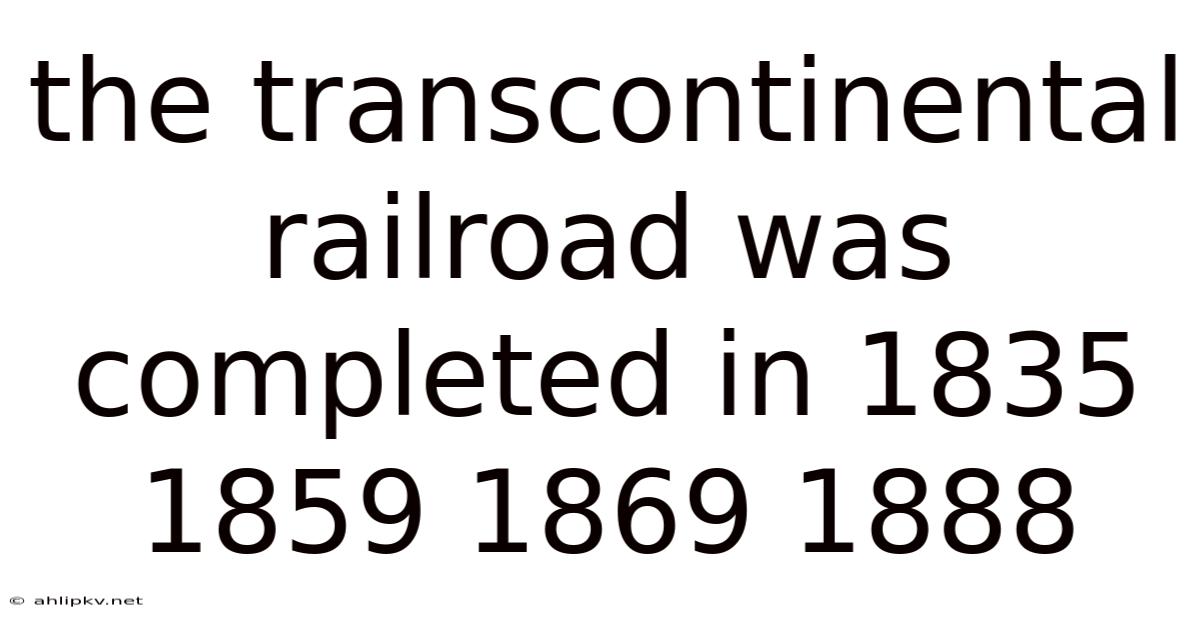
The Transcontinental Railroad and the Historic Completion of 1869
The completion of the first transcontinental railroad stands as one of the most transformative achievements in American history, permanently altering the economic, social, and physical landscape of the United States. For decades, students, historians, and curious travelers have encountered a range of dates associated with this monumental project—most commonly 1835, 1859, 1869, and 1888. While each of these years touches on some aspect of railroad expansion, only one marks the actual joining of the eastern and western rail networks: 1869. This article explores the true story behind the transcontinental railroad, clarifies the significance of the often-misremembered years, and examines the lasting legacy of the 1869 completion that connected a continent Took long enough..
The vision of a continuous railroad line stretching from the Missouri River to the Pacific Coast had been discussed since the earliest days of American statehood. Early proposals emerged as early as the 1830s, a period represented by the year 1835. At
